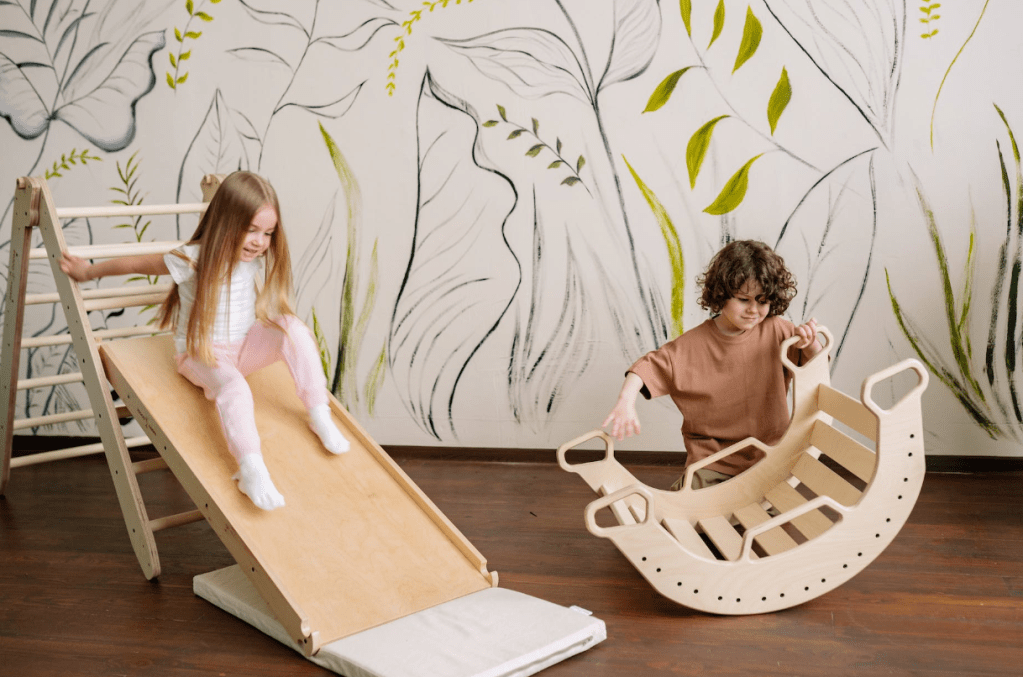
Have you ever considered the differences in development between boys and girls during their early years? As a father of two beautiful children: a 6-year-old son and a 2-year-old daughter, I have observed differences between my own children and often wonder if those are gender related. For instance, at a similar age, my daughter started walking and forming coherent sentences much earlier. On the other hand, my son grew much faster and and better at constructing toys from parts.
Research suggests that there are minimal differences in behavior and development between sexes and characteristics are largely determined by genetics and environment. While each child is unique and will develop at their own pace, there are some key differences worth noting.
Physical Differences
At birth, boys tend to weigh more and this trend continues as they grow older, with girls typically weighing about 0.2 kilos less. However, girls tend to catch up in weight as they enter the toddler years. In terms of height, most girls reach half their adult height by 19 months, while boys tend to reach this size around 2 years old. Around the same time period, boys typically weigh 9 to 14 kilograms and measure 77 to 89 centimeters in length. Girls weigh 8 to 13 kilograms and measure 76 to 88 centimeters in length.
Motor Skills & Cognitive Skills Differences
When it comes to motor skills there are some distinct differences. Studies have shown that boys and girls can have different abilities in certain areas of motor skill development. For example, boys tend to have better motor skills, like coordination, jumping, throwing, running and balance, while girls tend to have better fine motor skills, like drawing and using scissors.
For cognitive skills, boys tend to have better spatial awareness and problem-solving skills than their female counterpart. They may be more interested in building and manipulating objects, and may be more likely to engage in solitary play. Girls, on the other hand, tend to develop language and communication skills much faster than boys and likely to engage in social play. Boys might be slower to reach milestones like speaking their first words and using pointing gestures.
Behavioral Differences
Research shows that boys and girls can have different ways of communicating and behaving. Boys are less vocal and get into physical altercations more often, but they also tend to solve problems faster. Girls take more time to think things over before solving a problem and will talk it out before doing anything. Girls tend to be more thoughtful and considerate in what they say, while boys tend to speak more direct and to the point.
Girls also tend to form groups that focus on helping each other, being kind, and providing emotional support, while boys form groups that focus on competing with each other. Girls tend to be more helpful and caring towards others, as well as more empathetic, than boys. This can be seen early on, where girls tend to show more interest in taking care of younger kids and get upset when they hear another child crying.
In conclusion, while there may be some differences between male and female toddlers, it’s important to remember that every child is different and may not fit into these stereotypes. As parents, it’s important to treat our children as individuals and not make assumptions based on their gender. Additionally, it’s important to seek out more information and resources on gender and child development to better understand and support our children’s unique needs and abilities. It is also important to keep in mind that some of the differences mentioned above may be influenced by various factors such as upbringing, culture, and environment and not just gender.
 Modern Parenting 101
Leave a comment